3D & CAD

The workstation grinds. The laptop stays cool. Your render rig follows you.

Blender Cycles, V-Ray, SolidWorks PhotoView — CUDA and OptiX on the host, real-time orbit that feels native at 8 ms LAN. Pen, 3D-mouse and Wacom from the client. The MacBook Air becomes a window onto a 5000-dollar tower.

8 ms
glass-to-glass orbit · LAN
60 fps
viewport stream
H.265
screen-content tuned
$0
cloud GPU rental
GPU host

CUDA, OptiX, Metal — all on the host.

3D apps are GPU-bound by design. Cycles renders on CUDA, V-Ray uses OptiX denoising, Maya's viewport relies on hardware OpenGL. Every one of these stays on the host where the silicon lives. The host renders each viewport pixel at native rate, encodes it with its hardware video encoder — NVENC, AMF, or the Apple Media Engine — and sends the stream to the client, which decodes with its own hardware decoder. Neither end touches the geometry, textures, or scene file — only finished pixels move.

The hardware you already own — no per-hour cloud GPU rental.

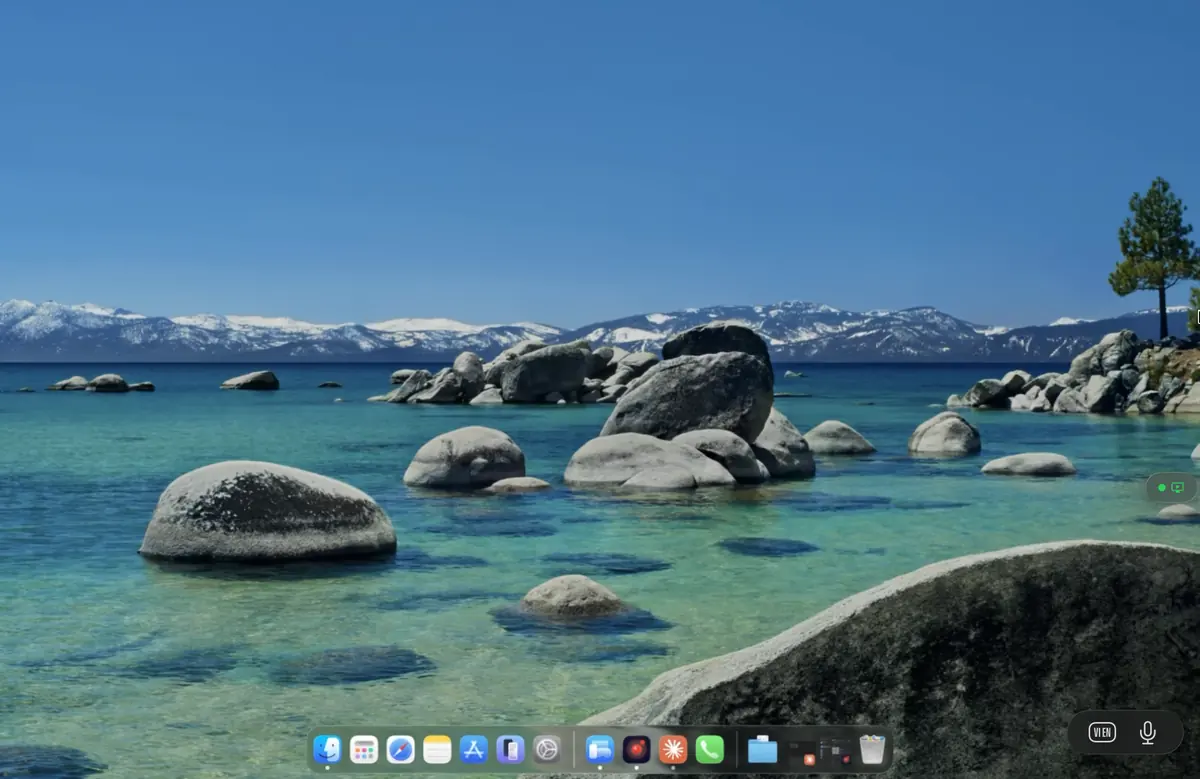
A GPU workstation viewport streamed live to a Mac through Remio

Citrix and Horizon were not built for the viewport.

VDI products were designed to display office apps. They handle static screens beautifully and break the moment a Blender viewport starts orbiting at 60 fps — the codec, the bandwidth budget and the input path were never tuned for a sculptor pulling on a mesh.

Bandwidth that gives up

Office VDI budgets 1–2 Mbps and assumes mostly-static screens. The moment a 3D viewport orbits, every pixel changes every frame — hence the soft, blocky picture VDI users learned to live with. Remio uses 8–25 Mbps of headroom and tunes the codec for high motion; the orbit stays sharp.

Codecs that smudge edges

Most VDI uses desktop-optimised H.264 that smudges high-frequency edges — the same edges that define a clean isoline in SolidWorks or a hard crease in ZBrush. Remio uses H.265 with screen-content tuning; isolines stay crisp, wireframes stay countable, text stays legible at zoom.

Input paths that lag the orbit

VDI buffers input alongside video for "sync" — the viewport orbits half a second behind the mouse, fine for a Save button, lethal for sculpting. Remio routes input on a separate low-latency channel; cursor and viewport track together at LAN speed.

Pen as a second-class citizen

Most remote protocols treat a Wacom stylus as "mouse-with-buttons" and discard the pressure stream — ZBrush, Substance Painter and Photoshop degrade to flat strokes. Remio passes pressure, tilt and azimuth end to end.

An iPad running Remio as a sculpting and CAD surface
Input devices

Every peripheral you bought for the workstation.

3D workflows are defined by their peripherals — a SpaceMouse for navigation, a Wacom Cintiq for sculpting, a Loupedeck for macros. Remio forwards each one end to end. SpaceMouse six-axis events reach the 3Dconnexion driver on the host. Wacom pressure, tilt, azimuth and pen-button events drive ZBrush and Substance Painter as if the tablet were plugged into the workstation. Apple Pencil 2 and Pencil Pro report pressure, tilt, double-tap and squeeze as native HID events.

A Cintiq Pro on the client effectively becomes a Cintiq plugged into the tower.

Vs cloud GPU

Your hardware vs renting somebody else's.

Lambda Labs, Paperspace, RunPod and Vast.ai rent GPU time by the hour. Remio gives you the same remote-access experience using the GPU you already own. The math depends on how often you render.

Cost over a year

A cloud A100 80 GB rents for roughly $1.20–2.00/hr on spot, $3.00–4.00/hr on demand. Render 40 hours a month: $480–1600/year. An RTX 4090 (comparable for 3D) is a one-time $1600 — payback in 12–18 months, then free. Remio adds no recurring cost beyond your electric bill.

Latency to first pixel

Cloud GPU cold-boots from an image — typically 2–5 minutes to an interactive desktop. Your workstation is already running. Remio connects in 2–3 seconds; the cursor moves; the viewport is alive.

Data stays at home

Cloud GPU forces you to upload your scene files every session. For NDA'd or studio-proprietary work, that's a deal-breaker. Remio keeps every asset on your workstation; only encoded pixels leave the network.

Licences you already paid for

Maya, ZBrush, SolidWorks, Revit, V-Ray — your seat licences live on the workstation. Cloud images ship with none; you re-activate every spin-up or rent the software too. With Remio, licences are wherever the workstation is.

Real workflows

Three artists, three workstations, one tablet each.

Composited from real conversations with users. Names abstracted, software versions and hardware specs preserved.

Blender Cycles on a 14" MacBook

A character artist runs Blender on a Threadripper PRO + RTX 4090 tower. From the cafe she opens her 14" MacBook Pro and orbits the Cycles viewport in real time; EEVEE Next preview runs at 60 fps. Sculpting in dyntopo with the Apple Pencil on a connected iPad sidecar feels native — the pressure curve is preserved end to end.

Revit BIM on an iPad Pro 13"

A BIM coordinator runs Revit on a Xeon W workstation; the 50 GB central model lives on a fileserver behind the firm firewall. From a client meeting room he taps the firm pairing and is in the model in 3 seconds — reviewing cloud-worksharing changes without exposing the fileserver to the internet.

SolidWorks PhotoView from home

A product designer runs SolidWorks + PhotoView 360 on a Threadripper + RTX A6000 in the office. He kicks off a render queue Friday afternoon, closes the office laptop, and from home Saturday opens a MacBook Air to check the queue — renders kept running, the Quadro did the work, the Air's battery never dipped below 80%.

Questions

Questions 3D artists ask first

Direct answers, no marketing detour.

Does Wacom pen pressure work?
Yes. A Wacom Intuos, Cintiq or Wacom One plugged into the client passes pressure, tilt and pen-button events through to the host. ZBrush, Mudbox, Substance Painter and Photoshop all receive pressure the same way they would if the tablet were plugged into the workstation directly. Apple Pencil on iPad Pro behaves identically.
3D mouse (SpaceMouse) support?
Yes. On the host (plugged into the workstation) it works natively. On the client (plugged into the laptop/iPad), the device's axis events are forwarded to the host via Remio's input channel, which works with modern 3Dconnexion drivers on macOS and Windows.
What viewport FPS should I expect?
Viewport FPS is determined by the host GPU, not Remio. An RTX 4090 viewport at 60 fps streams to the client at 60 fps. Remio adds 8 ms of glass-to-glass latency on a LAN — below the perception threshold for orbit. The viewport feels native.
VR or AR support?
VR headsets (Quest, Vive, Index) need direct host GPU access and submillisecond head-tracking, which no remote protocol can provide. AR overlays on iPad work normally since the AR rendering happens locally. Apple Vision Pro is supported as a Remio client — see vision-pro.
Texture painting in Substance Painter — responsive?
Yes on LAN. Brush response is GPU-bound at the host; Remio adds 8 ms. With a Wacom on the client, the stroke appears under the pen tip with no perceptible delay. On WAN (cellular, hotel WiFi), expect 30–100 ms — still workable but no longer transparent.
Can I run a render farm through Remio?
Remio streams a single desktop. For a render farm — multiple machines processing frames in parallel — use Deadline, Backburner or similar. Remio is useful for the artist's workstation that submits jobs and reviews previews, not as a transport for the farm itself. The farm renders at full speed independent of Remio.
Remio app icon

Your workstation does the grinding. You go anywhere.

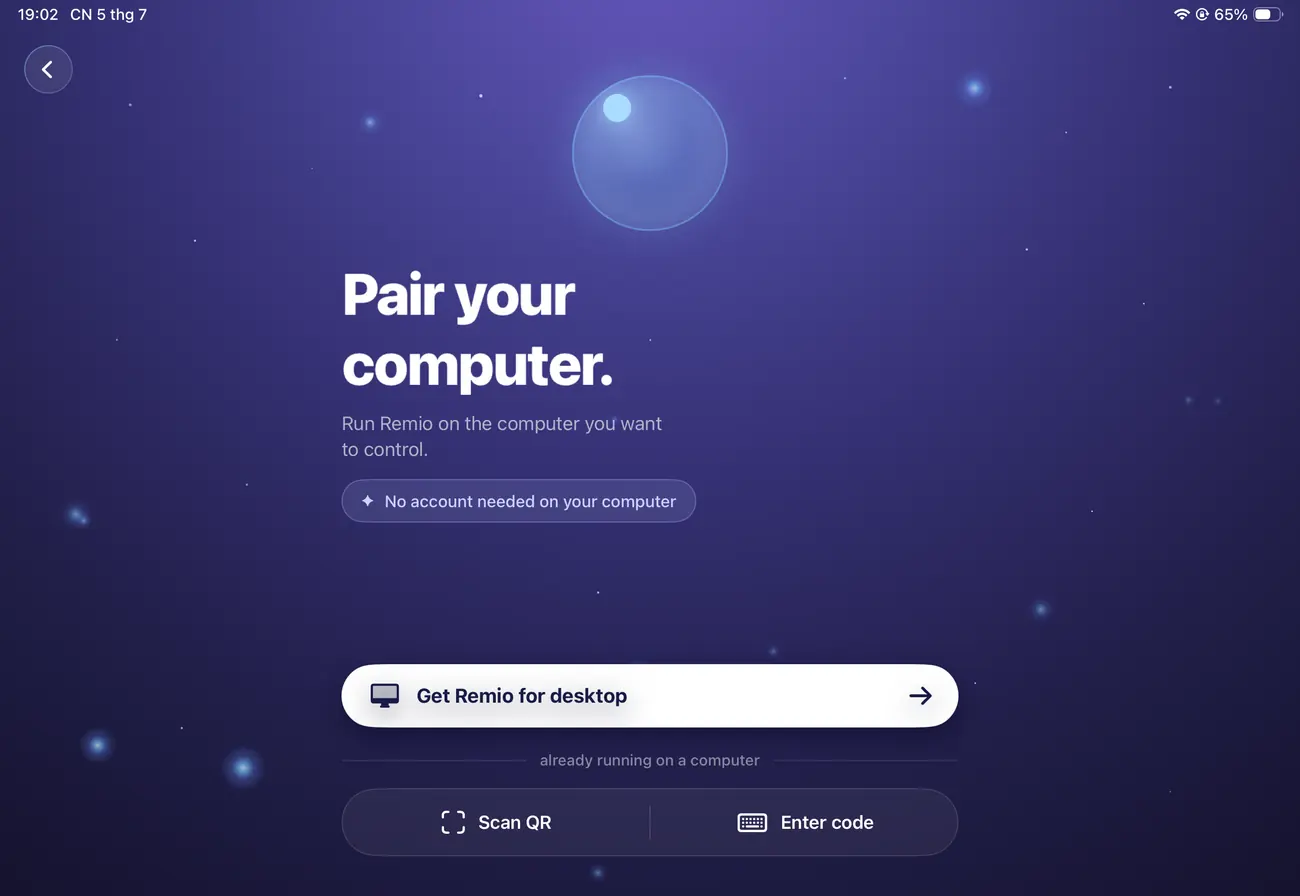
Install Remio Host on the tower with the RTX or the Apple Silicon, the client on the MacBook Air or iPad Pro you carry, and pair once with a 4-digit code — free, no account, no card.

Free foreverNo accountPaired in 30 seconds