iPhone → Mac

Your whole Mac, in your pocket.

A native iOS app — not a browser tab, not an Electron wrapper. The screen becomes a trackpad, the iOS keyboard speaks Cmd and Opt, and the Mac's audio comes with you. No iCloud, no Apple ID, no signup wall.

Free forever No account iOS 18+ · macOS 15+
Streaming

The remote control that's always with you.

A six-inch window onto a 27-inch desktop is not where you do all-day work — that is what the iPad client or another Mac is for. What the iPhone is, is the remote control in your pocket: kick off the overnight render in the elevator, grab a file off the desktop and send it on, restart a stuck app in forty seconds, approve the installer dialog that's holding everything up.

Minutes are all most of these jobs need — and minutes are what the phone is for.

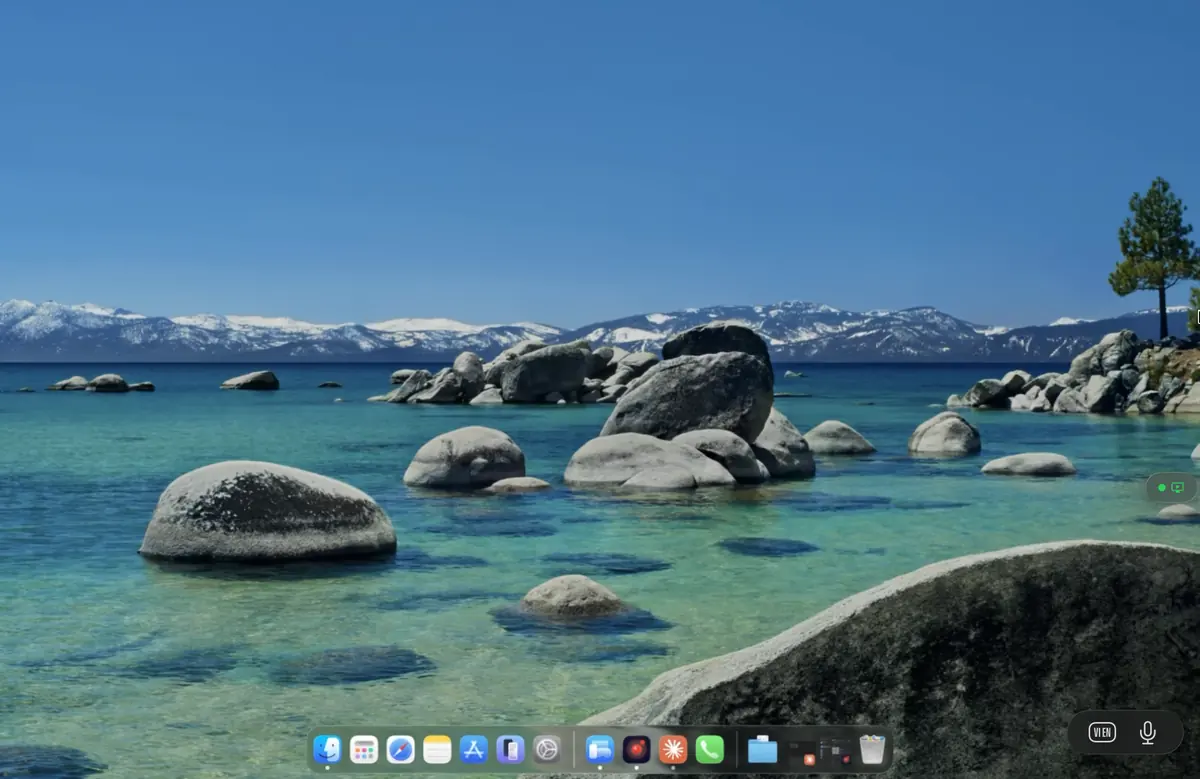
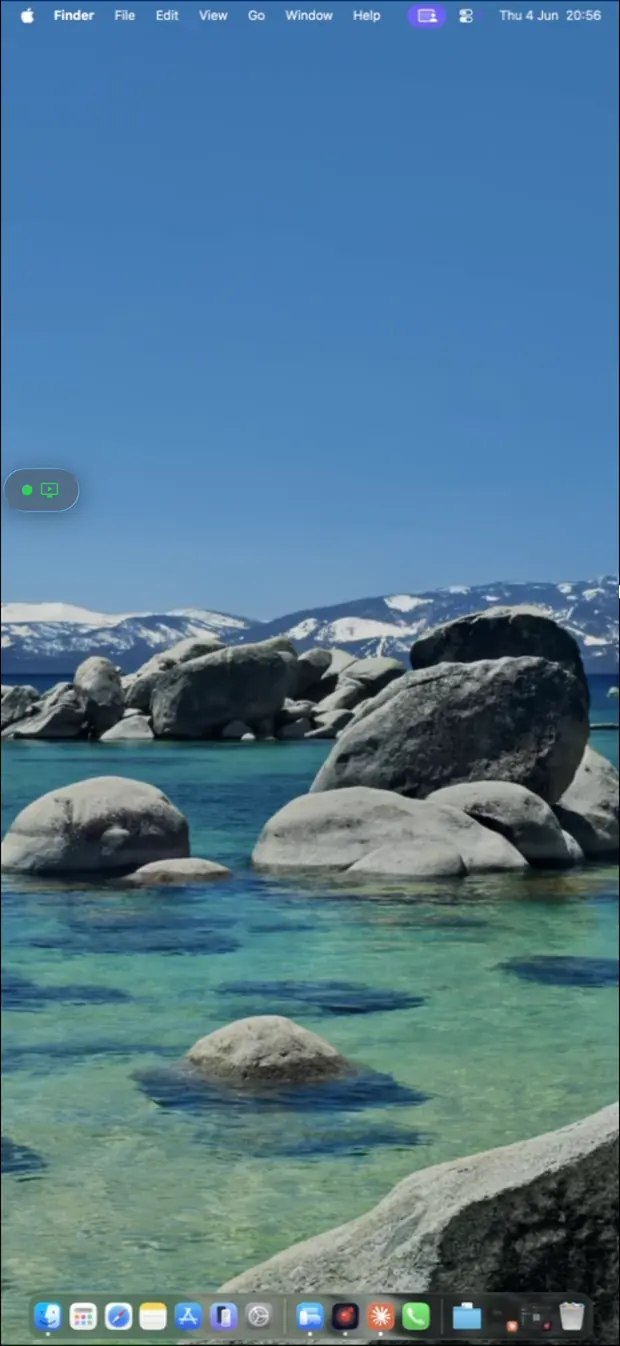
Remio streaming a full Mac desktop to an iPhone
The Mac desktop being driven remotely from Remio
Touch input

Input that doesn't fight you.

macOS assumes a mouse; your iPhone has none. So the whole screen behaves like a giant trackpad — a single finger drives the cursor with the same Apple pointer-acceleration curve, taps click where the pointer rests, and a two-finger tap is a right-click. Pinch zooms the streaming canvas to hit a small control, and a persistent cursor with synthetic hover keeps modern Mac UI honest.

The iOS keyboard speaks fluent Mac — Cmd, Opt, Ctrl, Shift, arrows and the F-row all land natively.

Setup

Set it up in five minutes.

Two installs, one PIN, no account. The only platform-specific work is granting the Mac's two privacy permissions — once.

01

Install Remio Host on the Mac

Download Remio-Host.pkg from remio.net/download and run it — signed and notarized by Apple, so Gatekeeper opens it without warning. Launch the host once; it parks in the menu bar. Grant Screen Recording and Accessibility in System Settings → Privacy & Security, then quit and relaunch — macOS only picks up new permissions on restart. You do this once.

02

Install Remio on the iPhone

Search "Remio" in the App Store (iOS 18 or later), or open remio.net/download on the phone to land on the App Store page. Launch it — no signup, no email confirmation, no onboarding tour. It opens straight to a pairing screen with a number pad and a QR scanner.

03

Pair with the 4-digit PIN

Click the Remio Host menu bar icon on the Mac and select Show pairing PIN. On the iPhone, scan the QR or type the four digits. The PIN is single-use and the request expires in 60 seconds — a code that leaks is worthless moments later. The pairing is permanent until you revoke it from the host menu bar; no account, email, or password was ever created.

04

Tap connect, you're in

The Mac shows up in the iPhone app as a named device. Tap it. Remio works out the best route automatically — a direct peer-to-peer connection on the same network (under 5 ms), or an encrypted relay if a direct path isn't available. The session opens with the Mac's audio in sync. Next time, the Mac is one tap away.

05

Optional: unattended access & Wake-on-LAN

If the Mac lives somewhere nobody sits, enable unattended access on the host so you can connect without someone clicking accept. Pair it with Wake-on-LAN and a sleeping Mac at home still answers — the iPhone wakes it, then connects. On a desktop Mac, also turn on Wake for network access in System Settings → Energy.

Network

Works from anywhere, end-to-end encrypted.

A phone is the device most likely to be on a network you don't control — cellular on the train, the hotel's Wi-Fi, a conference's captive portal. Remio is built for exactly that, with no router homework.

5G and hotel Wi-Fi just work

Remio connects the iPhone and the Mac peer-to-peer, and NAT traversal does the hole-punching automatically — no port forwarding, no VPN, no router configuration. If a direct path is impossible, an encrypted relay carries the session instead.

AES-256-GCM, keys stay home

Every session is end-to-end encrypted with AES-256-GCM and ECDHE key exchange over Curve25519. The keys are derived between your two devices and never leave them — the server only introduces the devices and cannot decrypt the stream.

Sub-5 ms LAN, 22 ms WAN

On the same network, input-to-pixel latency measures under 5 ms; same-region over the internet, around 22 ms — both verified May 2026. The benchmarks page documents the method. The pointer tracks your finger and a forty-second fix takes forty seconds.

The Mac's sound, in sync

Whatever the Mac plays streams to the iPhone in sync with the video — the export-finished chime, the voice memo, the video whose audio tells you the render came out right. iPhone speaker or AirPods, your choice.

In the wild

The same two apps, three different pockets.

If one of these looks like your week, the five-minute setup above is all that separates you from it.

01
Headless Mac mini

A Mac mini at home, your iPhone anywhere

A Mac mini with no monitor runs the backups, the media library, the odd overnight build — and your iPhone is the only screen it ever needs. Enable unattended access, add Wake-on-LAN, and the mini answers from wherever you are. The use-cases page shows this Mac-at-home, work-from-anywhere pattern as a full workflow.

02
Checked from the couch

The studio Mac, glanced at from the kitchen

The Mac Studio upstairs is rendering, exporting, or seeding tonight's upload. From the couch or the kitchen, a ten-second session confirms the progress bar is still moving — no stairs, no waking the laptop. On the same Wi-Fi the connection runs under 5 ms, so the quick check feels like holding the Mac in your hand.

03
Family IT

Your parents' Mac, supported from your phone

You're the family IT department, and your toolkit is the phone in your pocket. When "the photos are gone" again, open their Mac from wherever you are, fix it while they watch, and narrate over the call — the use-cases page and the guide to fixing your parents' computer from 500 miles away cover this end to end.

Picking a client

iPhone, iPad, or another Mac?

An honest sizing guide. The iPhone is the pocket option — always with you, perfect for the five-minute check, the restart, the approval, the file grab. For real work sessions — an hour of writing, a design review, Xcode on the couch — the iPad's larger canvas, Magic Keyboard, and Apple Pencil make it the better client: see connect an iPad to a Mac. Desk-to-desk, Mac-to-Mac is the most natural pairing of all — the Mac-to-Mac setup guide covers it.

Same host app, same one-time PIN, same end-to-end encryption — the only choice is which screen is in front of you.

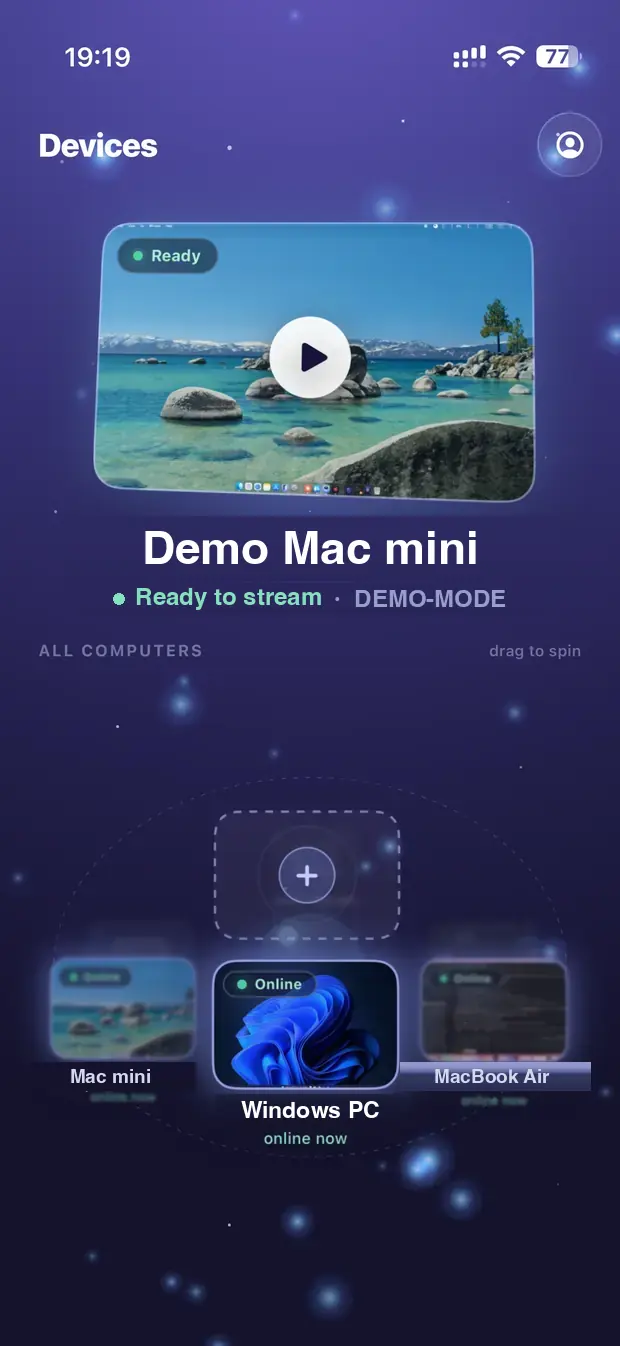
The Remio iPhone app listing paired Mac and Windows devices
FAQ

Things people ask first.

Five questions the iPhone-to-Mac direction tends to raise — honest answers below.

Do I need iCloud or an Apple ID to pair?
No. Remio does not use iCloud, Apple ID, or any identity service — and there is no Remio account to sign up for either. Pairing is purely local: the Mac shows a one-time 4-digit PIN, you type it into the iPhone app, and the pairing request expires in 60 seconds if unused. No email, password, or profile is created at any point.
Does it work over cellular/5G?
Yes. Remio connects your iPhone and your Mac peer-to-peer with end-to-end encryption and needs no port forwarding, no VPN, and no router configuration — 5G, LTE, and hotel Wi-Fi all work. If a direct path is not available, the session falls back to an encrypted relay that cannot read your stream. Data usage depends on the quality settings you choose in the session toolbar — drop the resolution or frame rate on a metered plan and the stream slims down to match.
Can I type with the iPhone keyboard, including Cmd shortcuts?
Yes. Hardware keyboards (a Magic Keyboard or any Bluetooth keyboard paired with the iPhone) forward natively as a real Mac keyboard. The on-screen iOS keyboard maps every key to a native macOS key event — arrow keys, function row (F1–F12), modifiers (Cmd, Opt, Ctrl, Shift), and shortcuts like Cmd+C, Cmd+Tab, Cmd+Space. Long-press a key on the iOS keyboard for accented or special characters.
Will it wake my Mac from sleep?
Yes. Enable Wake-on-LAN and the iPhone client can wake a sleeping Mac before it connects — useful for a Mac mini at home that naps between sessions. On a desktop Mac, also turn on Wake for network access in System Settings → Energy so the host answers instantly. The Wake-on-LAN guide covers the setup step by step.
Is it really free?
Yes. Remio is completely free — every feature, on every platform. The iPhone client, the Mac host, 4K streaming, audio, clipboard sync, file transfer, unattended access, Wake-on-LAN, and end-to-end encryption are all included. There is no account and nothing held back.
Remio app icon

Your whole Mac, one tap away.

Install Remio Host on the Mac, install Remio on your iPhone, pair once with a 4-digit PIN — that's the whole setup, and it costs nothing.